New future for Northwood

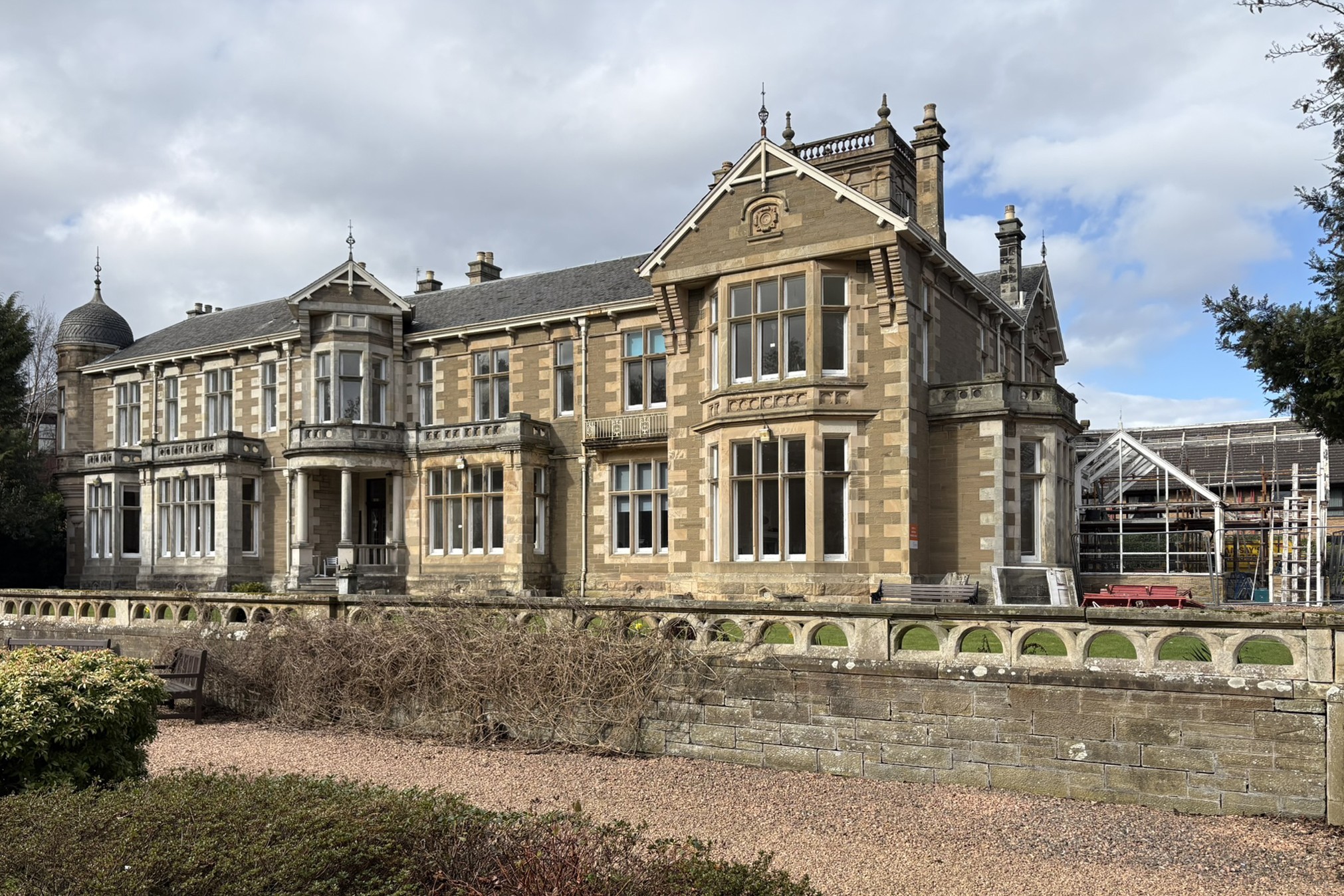
As some will have seen in the Courier, the Victorian mansion of Northwood in West Ferry has been bought by enthusiastic local couple Brenda and Scott Ettershank, who plan to turn it into serviced offices.

Originally called Corona, the Category B listed house was designed by George Shaw Aitken, a London-born architect who trained in Edinburgh and Manchester before joining James Maclaren’s practice in Dundee in 1869, becoming a partner in 1873. He then ran his own practice in Dundee from 1878 to 1881, before finishing his career in Edinburgh.

The house was designed in 1880 for Robert Aitken Mudie, a shipowner and coal merchant, and was described as two storeys with tower and irregular plan. Internally, it featured ceiling cornices and fine plasterwork with a Tudor rose motif. It had eighteen windows and a spiral staircase to the tower observation room.

On Mudie’s death, it was bought in 1910 by William Thomson, shipowner and brother of DC Thomson. He had married Clara Leng, daughter of publisher Sir John Leng, and was a Director of the Alliance Trust and President of the Chamber of Commerce in 1907. Thomson changed the name of the house to Northwood and added stained glass windows and a billiard room with Corinthian columns.

His son, Eric V Thomson, inherited the house and on his death it was sold to the Servite Housing Association in late 1985. Servite built housing in the grounds and finally, as Caledonia Housing, sold the mansion to the Ettershanks in 2025.

The Trust welcomes the plans to sensitively convert this important house to thirty serviced offices, retaining all the notable internal features. We have suggested that disabled parking and wheelchair access is better clarified and that the opportunity should be taken to add solar panels discreetly to the roof.

Local Development Plan 2019 Review

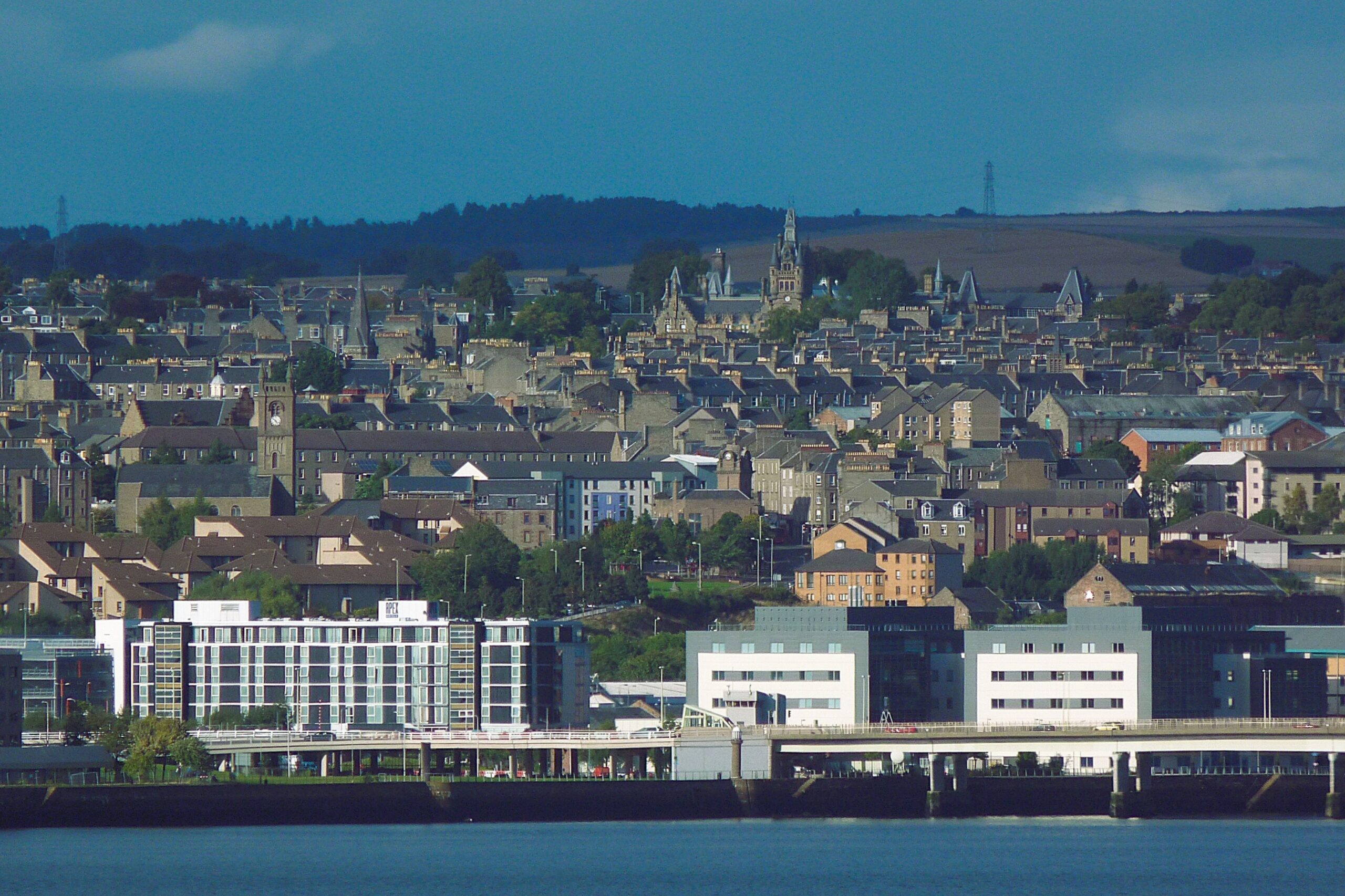
Dundee Civic Trust welcomes the City Council’s review of the 2019 Local Development Plan. The previous plan had some strengths, but it no longer reflects current national policy or the city’s needs. We argue that the next plan should be more ambitious, coherent and adaptable, with flexible planning frameworks rather than rigid masterplans. Dundee’s tightly drawn boundaries significantly limit the city’s potential and should be expanded outwards to strengthen the city’s role as a regional hub.

Dundee’s UNESCO City of Design status should play a far greater role in shaping development, supported by clearer design policies, stronger guidance and a new multidisciplinary review panel. Higher‑density living, reuse of vacant buildings and better housing data are highlighted as essential, along with improved design standards and more mixed‑use neighbourhoods.

For the city centre, the Trust emphasises the importance of increasing the residential population to support activity throughout the day and evening, alongside improvements to major sites, public transport and mixed‑use development. We also call for a shift toward regenerative design, expanded biodiversity, better flood planning and a more resilient energy strategy. On transport, we stress the need for better bus services, improved rail connections, a relocated bus station and safer, more practical cycling routes.

Read a summary of our response to the Call for Ideas Stage here and our full report here.


“Obstacles, Opportunities, Observations” by Graeme Hutton RSA

Graeme Hutton RSA is an Architecture Professor and photographer. He was formerly Professor of Architecture and Deputy Dean at Duncan of Jordanstone College of Art, where he worked for 26 years. Considered a ‘Pracademic’ by his colleagues, he has always married his work in education with a commitment to creative practice. As an educator he has used The City of Dundee and comparator European cities as contexts for speculative design projects. His close association working with the city led to him being central to the procurement of the V&A building and the new Dundee House city headquarters.
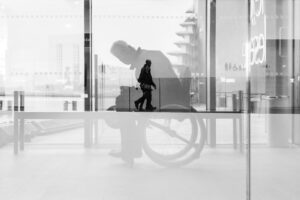
As a practicing architect, his rural houses with LJRH Chartered architects have been recognised by various awards, including RIBA & RIAS, Scottish Design Awards, Dundee Institute of Architects, Angus Building of the Decade as well as being shortlisted for Grand Designs House of the Year. As a photographer his work has been showcased by Leica UK and exhibited at The Royal Scottish Academy and V&A Dundee.

Graeme has lived with multiple sclerosis for over 30 years and has been a wheelchair user for more than 10 years. He says:

“As a wheelchair user with a progressive illness, I use photography to explore the whole of my physical self in various contexts. I am now completely reliant on the chair, such that it is an extension of me, and I try to capture this situation in different contexts and in inventive, even beautiful ways. My sense of being at one with my disability is enabled through my creative practice. It is something over which I have complete control, now in a future that is less certain.”

Graeme’s illustrated talk, ‘Obstacles, Opportunities, Observation’ will explore the interconnections between these thematic topics as they pertain to our public realm, and their importance in helping shape rewarding creative work.

The talk will take place as usual in Dundee Arts Society Roseangle Gallery, starting at 7.00 pm.  Visitors are always welcome and there is the usual opportunity to chat afterwards over a glass of wine.

“The Origins of Dundee’s War Memorial” by Matthew Jarron

We restart our Winter Evening Talks on Thursday 17 October 2026 when Matthew Jarron will tell us about “The Origins of Dundee’s War Memorial”

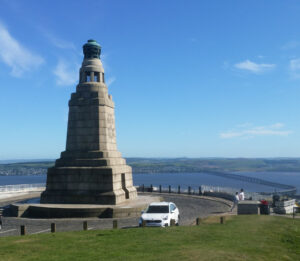
The war memorial beacon on the top of Dundee Law recently celebrated its centenary. For over a hundred years it has been one of the city’s most iconic landmarks, yet its location and its distinctive design were the subjects of considerable debate and controversy in the years immediately following the end of the Great War. In this talk, Matthew Jarron relates the complex saga of the memorial’s design and creation.

Matthew Jarron is Curator of the University of Dundee Museums, comprising over 35,000 artefacts, artworks and specimens displayed in a variety of venues including the Tower Foyer & Lamb Galleries, the D’Arcy Thompson Zoology Museum and the Tayside Medical History Museum. Matthew is also Secretary of the Abertay Historical Society, co-ordinator of the Public Art Dundee project, a former chair of the Scottish Society for Art History and the author and/or editor of several books including Independent & Individualist: Art in Dundee 1867-1924.

A Dundee Design Review Panel

Dundee Civic Trust proposes the creation of a Dundee Design Review Panel to support high‑quality, sustainable and design‑led development across the city. Although Dundee is a UNESCO City of Design, it currently lacks an independent, multidisciplinary mechanism for assessing the design quality of planning proposals. Modelled on the Edinburgh Design Panel, the initiative would be developed collaboratively with Dundee City Council, professional institutes, universities, UNESCO City of Design Dundee, and community representatives, aligning with National Planning Framework 4.

The panel would offer independent expert advice at the pre‑application stage, helping design teams strengthen proposals, reduce planning risk and improve outcomes while complementing statutory planning processes. Chaired by a senior planning officer, it would comprise voluntary specialists from relevant disciplines and meet monthly or bimonthly. Priority would be given to developments with long‑term impact. Written reports would be published, and applicants would be expected to demonstrate how they addressed the panel’s recommendations.

Read our document here.