Issue 76 of our Newsflash is here. Open this page and click here to read it in full.

Issue 76 of our Newsflash is here. Open this page and click here to read it in full.
We reported in January 2025 on seventeen new housing developments in the city, upon which construction had started. The majority have now been completed and are occupied. The exceptions are:
Gellatly Street – 49 flats. Delayed by contractor failure. Now under a new contractor, with work proceeding on the existing building but not yet on the adjoining new-build site.
Crichton Street/ Whitehall Crescent – 14 flats. Work still not completed on conversion of this former office block.
Brown Street/Douglas Street (Parklands). Phase 1 with 163 student beds is complete and operational. The adjoining Phase 2 of 198 beds has still to start.
City Quay (Hillcrest). Development of 119 flats is complete, but the convenience store which had been signalled as Tesco is unoccupied and for rent.
Meanwhile, new developments underway include:
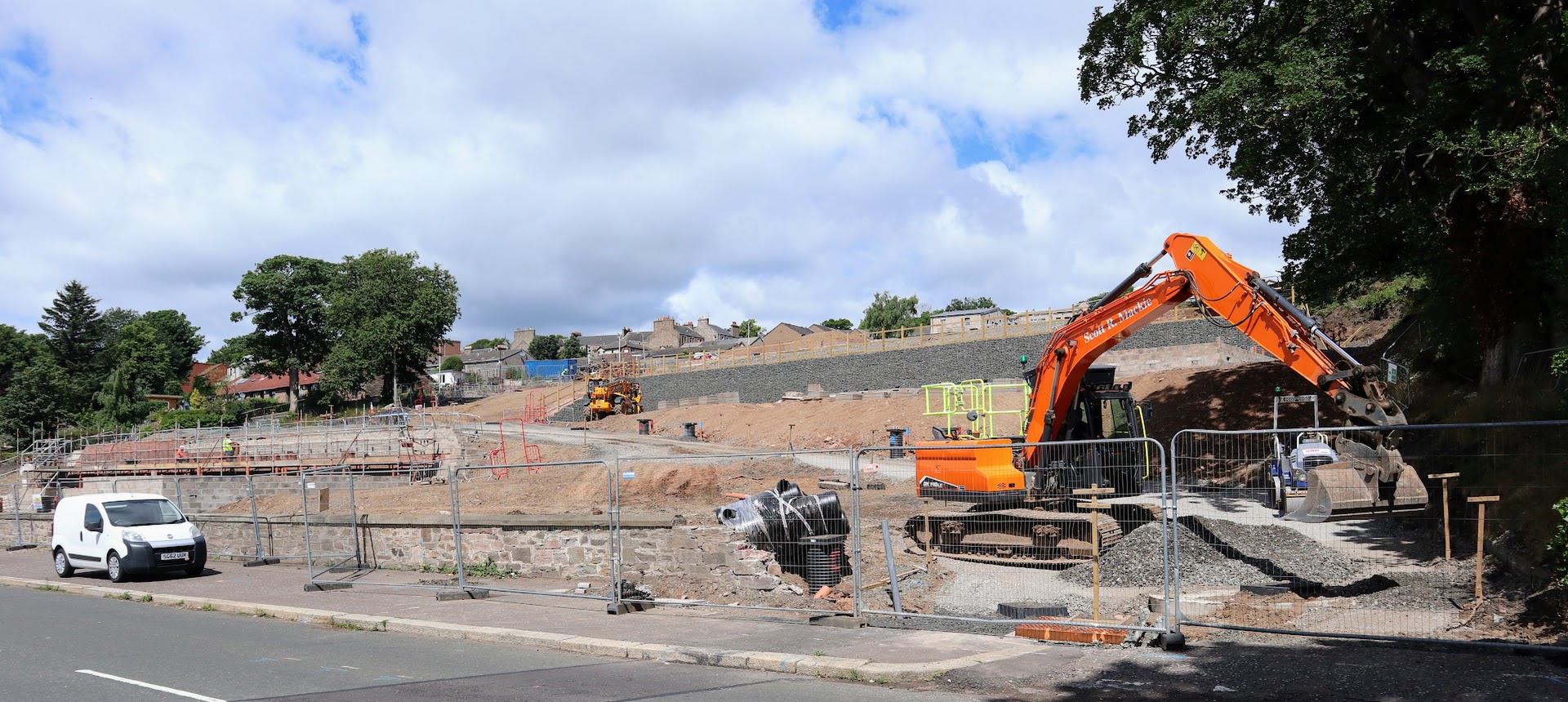
Ellengowan, Phase 2 (Hillcrest). 60 flats/houses, replacing former inter-war blocks (see main picture).
Burnside Street, Lochee (Hillcrest). 54 flats in last part of Camperdown Works to be converted.
Fernbrae, Perth Road (Kirkwood). 20 apartments and 5 houses.
West Bell Street/Ward Road. Conversion of former BT building to provide 417 student beds.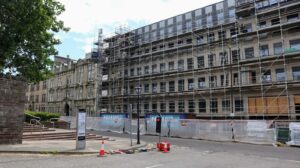
Lindsay Street/Ward Road. Former DWP office building being converted to 168 student beds.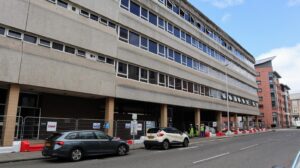
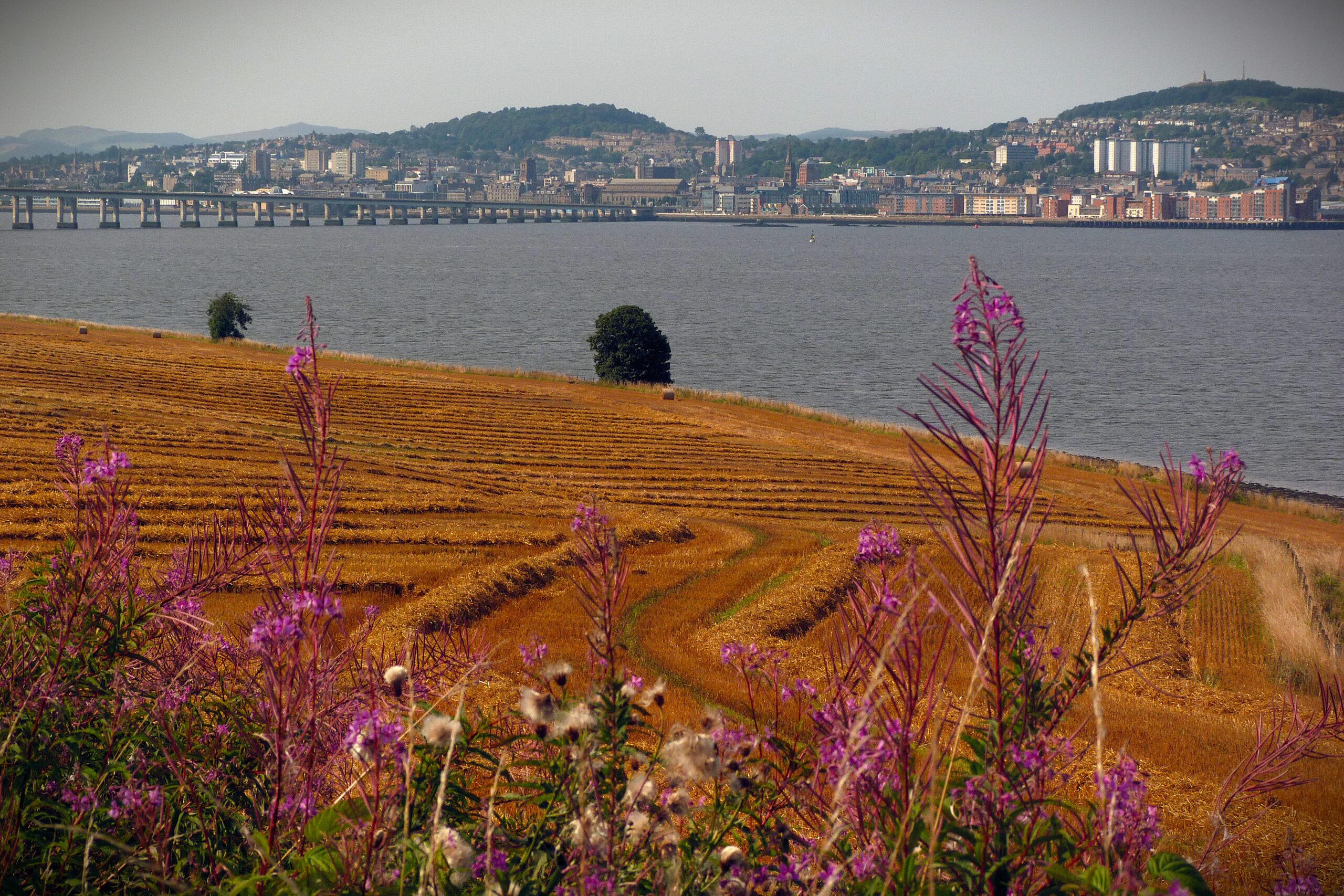
The city’s last review of its Local Development Plan was in 2019, and DCT commented fully on it at that time.
Dundee City Council has now started the ball rolling again and wishes to work on a new plan over the next two years, publishing a new version in 2028. The Council has put out a Call for Ideas, and DCT has risen to the challenge. We have produced our submission, one that is substantial and detailed, and it has now been lodged. We expect that it will generate some considerable interest.
We consider that LDP19 contained many useful ideas, but it is now outdated. Several key ambitions were never realised, and the arrival of National Planning Framework 4 in 2023 has reshaped how Scotland approaches future living. Our vision argues that the next local plan must be bold, dynamic and forward‑looking. We follow the structure of LDP2019, offering clear responses in each section.
The current LDP Vision lacks a coherent thread. It needs to be braver, more flexible and better integrated across all policy areas. Rigid “Masterplans” should give way to adaptable planning “Frameworks”. Dundee’s boundaries—already the most constrained in Scotland—must expand to include neighbouring settlements north of the Tay, strengthening the city’s long‑term sustainability and its role as a regional economic and social hub.
Read the full document in the Policy pages of this website.
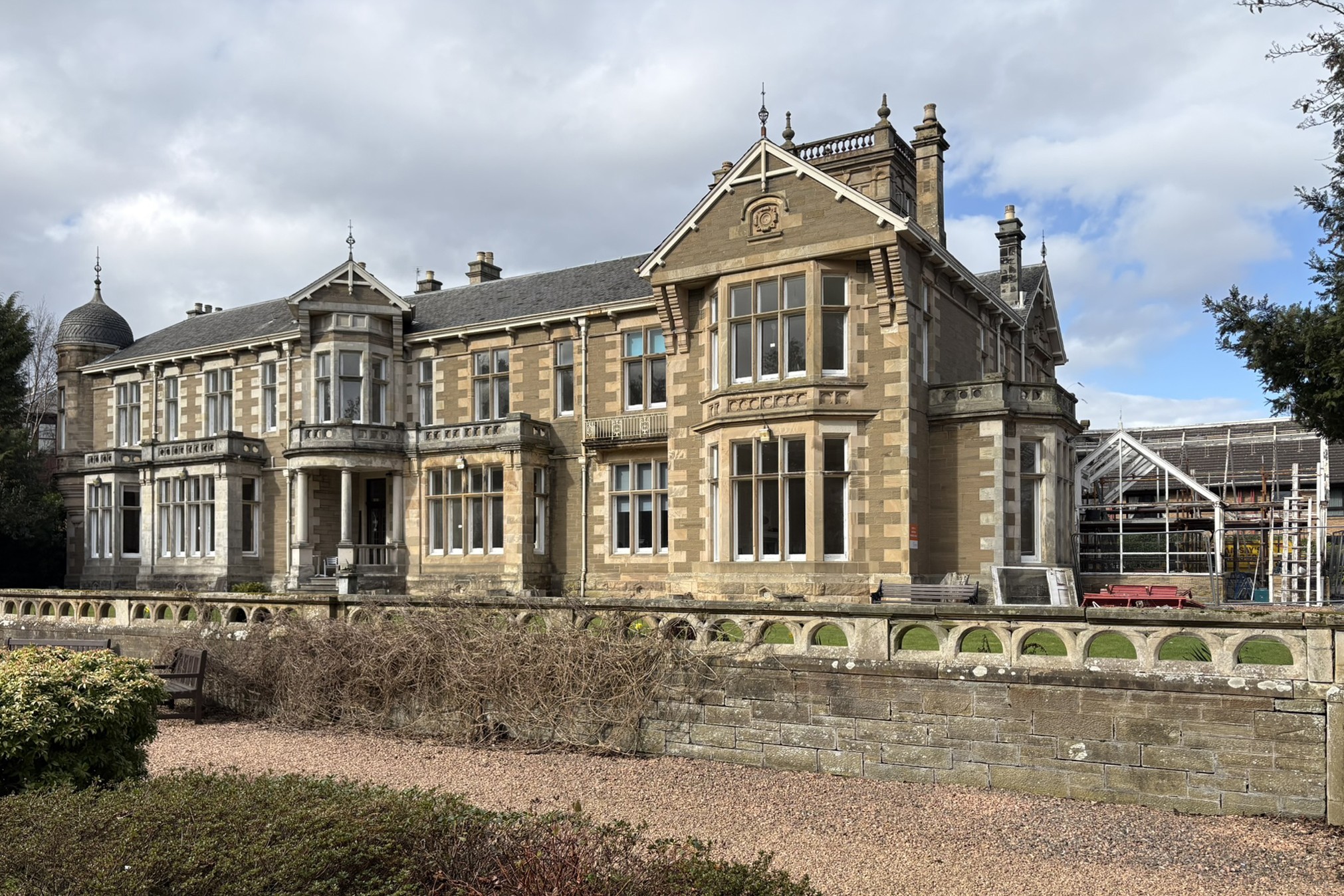
As some will have seen in the Courier, the Victorian mansion of Northwood in West Ferry has been bought by enthusiastic local couple Brenda and Scott Ettershank, who plan to turn it into serviced offices.
Originally called Corona, the Category B listed house was designed by George Shaw Aitken, a London-born architect who trained in Edinburgh and Manchester before joining James Maclaren’s practice in Dundee in 1869, becoming a partner in 1873. He then ran his own practice in Dundee from 1878 to 1881, before finishing his career in Edinburgh.
The house was designed in 1880 for Robert Aitken Mudie, a shipowner and coal merchant, and was described as two storeys with tower and irregular plan. Internally, it featured ceiling cornices and fine plasterwork with a Tudor rose motif. It had eighteen windows and a spiral staircase to the tower observation room.
On Mudie’s death, it was bought in 1910 by William Thomson, shipowner and brother of DC Thomson. He had married Clara Leng, daughter of publisher Sir John Leng, and was a Director of the Alliance Trust and President of the Chamber of Commerce in 1907. Thomson changed the name of the house to Northwood and added stained glass windows and a billiard room with Corinthian columns.
His son, Eric V Thomson, inherited the house and on his death it was sold to the Servite Housing Association in late 1985. Servite built housing in the grounds and finally, as Caledonia Housing, sold the mansion to the Ettershanks in 2025.
The Trust welcomes the plans to sensitively convert this important house to thirty serviced offices, retaining all the notable internal features. We have suggested that disabled parking and wheelchair access is better clarified and that the opportunity should be taken to add solar panels discreetly to the roof.
September 2026 update: Read more about the facilities available on the Northwood House website here.

Following the pattern set to mark the Trust’s 50th anniversary in 2023, this year’s ceremony featured our own Award and Commendation categories along with a Conservation Award made jointly with Dundee Historic Environment Trust. Read more about the four deservedly winning projects on our Latest Awards page here.

Have you heard of the International Festival of Stone? If not, you’ll learn all about this celebration of our traditional building material in the leading article of Newsflash 71.
Inside, we take a look at plans for a recovery village and the recent proposals for an active travel network; the barriers standing the way of more city centre residential developments; and much more. Click here to read this issue.

Our 70th Newsflash edition is out. Open this page and read our latest interesting mix of news and opinion by clicking here.

Tayside House, the Hilton hotel and the old Olympia leisure centre have now been gone for a decade and more, so that they already seem like a distant memory.
Much as many people wish to have seen these and other former features of the Tay Road Bridge landfall replaced by a new expanse of urban parkland and water, perhaps imaginatively reviving the old western docks infilled in the 1960s, the reality is that renewal of the Central Waterfront was always first and foremost a real estate project. The revenue generated by commercial development of the various sites is needed to offset the capital cost of the considerable infrastructure alterations; while, of course, boosting the city’s economy.
However, the reconfigured road layout has now been in place for some ten years, while nearly three decades have passed since the renewal of the waterfront was conceived; yet anyone arriving in Dundee off the road bridge is still being greeted by an extensive series of unsightly waste land plots enclosed by hoardings.
Most of the key figures in local government who were connected with the original Waterfront Masterplan have retired or moved on. Meanwhile, the slow pace of development is now in danger of becoming (to use that tired cliché) Dundee’s ‘elephant in the room’.
It is the view of Dundee Civic Trust that, if we are to avoid another decade and more of this scenario, an honest reappraisal and change of focus is required in respect of the Central Waterfront. We have produced a comprehensive discussion document, which has been shared with councillors and officials on Dundee City Council and which you may access here. We do not expect people to agree with everything we are suggesting, but it is to be hoped our words will stimulate debate and discussion.
The biennial Awards are a way of honouring the Trust’s motto, ‘encouraging the best’. In turn, we encourage all who care about the improvement of the urban environment of Dundee to nominate projects worthy of recognition.
Our judging panels shall look at developments completed between 1 June 2023 and 31 May 2025, under the following categories:
Click on this link for more information and the application form. Enter all details, then download it using the icon at top right to save ‘with your changes’. Otherwise, you may save the blank form and complete it later. Once all details have been entered, email the form back to the Trust as directed. A separate form is required for each nomination.
Encourage the best!

It is perhaps easy to get a bit depressed when considering the number of vacant buildings and empty plots around Dundee. The Civic Trust, however, recognises that a significant amount of development is underway involving brownfield sites and redundant buildings. This is bringing more housing and more choice to residents and students in the city.
Here is a snapshot of the developments already completed and still underway at the end of 2024:
That is a total of 717 flats and houses and 617 student beds. Now, this is not to say that the Trust would rush to give its seal of approval to the design standards displayed by all of these developments, which range from the exciting and visually appealing to the indifferent and (to put it mildly!) disappointing.
There are many other sites under development; and more empty buildings and brownfield sites with planning approval. On the other hand, there is still a significant lack of affordable housing throughout the city. Imaginative thinking will be needed to bring these issues together successfully.